

Sole Proprietorship: Benefits, Limitations and Tax Treatment
August 17, 2026
LLC Tax Treatment: Single-Member, Partnership or S-Corp?
August 17, 2026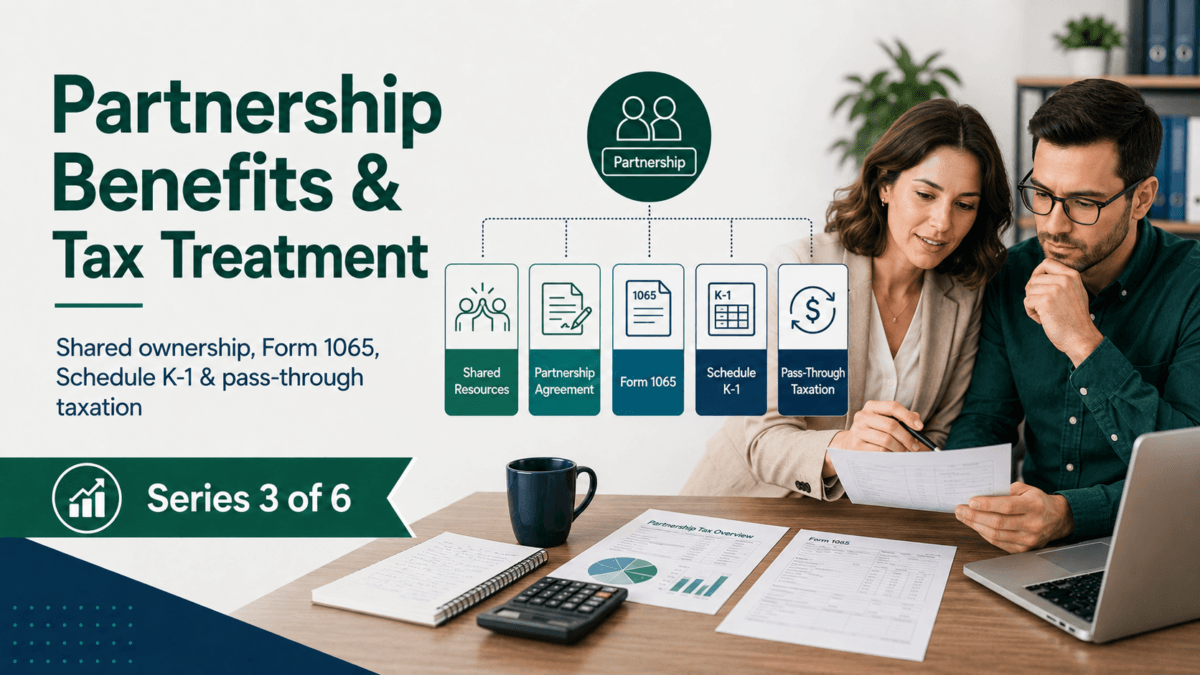
When considering a partnership business structure, business owners often seek a collaborative model that can enhance their capabilities and resources. Partnerships enable two or more individuals to unite their skills, capital, and vision, which can lead to numerous advantages as well as some limitations. Understanding the legal framework, governance protocols, and tax implications of partnerships is essential for anyone contemplating this structure.
Understanding Partnerships
A partnership business structure allows two or more individuals to operate a business as co-owners. This model can make sense for various reasons:
- Shared Resources: Partners can pool their financial resources, increasing the capital available for investments and operational expenses.
- Diverse Skill Sets: Each partner may bring unique skills or expertise to the table, enhancing the overall business’ capabilities.
- Collaborative Decision-Making: Partners can share the responsibility of decision-making, often leading to more balanced and well-considered outcomes.
Benefits of a Partnership
Partnerships offer a variety of benefits that can make them an appealing choice for many entrepreneurs:
- Flexibility: Partnerships can be structured in numerous ways, including general partnerships, limited partnerships, and limited liability partnerships, providing options that fit different business needs.
- Ease of Formation: Establishing a partnership often requires less formal paperwork compared to corporations or LLCs, making it easier to get started.
- Flow-Through Taxation: Partnerships typically do not pay income tax at the entity level. Instead, profits and losses “pass through” to the partners, simplifying tax treatment.
Limitations of a Partnership
Despite the numerous advantages, there are also limitations associated with this business structure:
- Unlimited Liability: In general partnerships, each partner can be held personally liable for the debts and obligations of the business, which can pose significant risks.
- Potential for Conflict: With multiple decision-makers, differing opinions and conflicts can arise, making effective communication and governance crucial.
- Shared Profits: Partners must share the profits, which can sometimes lead to dissatisfaction or disputes if contributions are perceived as unequal.
Partnership Agreements and Governance
A well-crafted partnership agreement is vital for establishing the rules and responsibilities of each partner. This document should outline:
- Each partner’s contributions, whether financial, skill-based, or labor-related.
- Decision-making processes, including how disputes will be resolved.
- Terms regarding new partner admissions and dissolution of the partnership.
Such agreements can help mitigate conflict and ensure that all partners are aligned, thus promoting a healthy working relationship.
Liability Considerations
Liability is a significant concern in any partnership. General partners face unlimited personal liability, which means their personal assets could be at risk if the business incurs debt or faces a lawsuit. However, limited partners in a limited partnership are only liable to the extent of their investment. Furthermore, certain structures, like limited liability partnerships (LLPs), can provide added protection against personal liability.
It’s essential to review the legal structures available in your state and consult with experts to tailor a partnership model that suits your safety and operational needs. Always keep in mind that state laws may vary significantly regarding partnership liabilities and protections.
Tax Treatment of Partnerships
In terms of federal tax treatment, partnerships file an informational return known as Form 1065. This form reports the partnership’s income, deductions, and other relevant financial information. The net profits or losses reported are distributed among the partners via Schedule K-1, which they use to report their share on their personal tax returns.
It’s important to note that partners are not considered employees of the partnership for federal tax purposes, which has implications for self-employment tax obligations. Therefore, partners generally need to make estimated tax payments based on their share of the partnership income.
Conclusion
A partnership business structure can provide significant benefits, including flexibility, shared resources, and simplified tax treatment. However, it is essential to consider the limitations, especially regarding liability and potential conflicts among partners. Establishing a comprehensive partnership agreement and consulting with legal professionals are crucial steps in ensuring a successful venture.
Managing a partnership efficiently requires diligent bookkeeping and financial organization. FSMC Bookkeeping Services specializes in helping businesses streamline their accounting processes. By maintaining accurate financial records and utilizing QuickBooks Online for bookkeeping, partners can focus on growing their businesses while leaving the administrative complexities to professionals.
If you’re considering a partnership or need assistance with maintaining organized financial records, reach out to FSMC Bookkeeping Services to explore how we can support your business needs.
Visit us at FSMC Bookkeeping Services for more information.