
The Foreign Earned Income Exclusion
February 27, 2025
Sole Proprietorship: Benefits, Limitations and Tax Treatment
August 17, 2026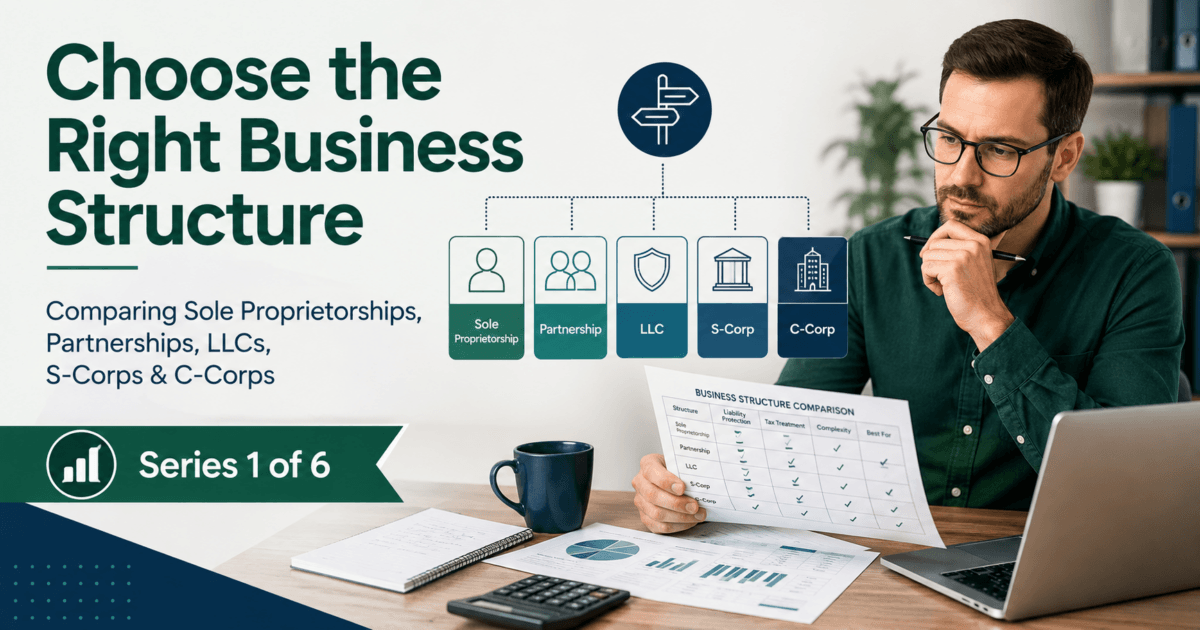
When starting a business, one of the most critical decisions you’ll face is how to choose a business structure. The type of organization you select can significantly impact your operations, liability, tax treatment, and growth opportunities. This guide provides a practical framework for comparing five common business entities: sole proprietorships, partnerships, limited liability companies (LLCs), S-corporations, and C-corporations.
Understanding Business Structures
Before diving into the specifics, it’s important to clarify that the legal entity type and federal tax classification are related but not always the same. Different structures carry distinct legal, liability, and tax implications that can shape your business strategy.
1. Sole Proprietorship
The simplest form of business organization is a sole proprietorship. In this structure, one person owns and operates the business.
Benefits:
- Easy to Set Up: Minimal paperwork and cost to establish.
- Complete Control: The owner has full decision-making power.
- Tax Simplicity: Profits and losses are reported on the owner’s personal tax return.
Limitations:
- Personal Liability: The owner is personally liable for all business debts.
- Financing Challenges: Raising capital may be more difficult compared to other structures.
- Limited Lifespan: The business ceases to exist upon the owner’s death.
For more detailed information, read about the Benefits, Limitations and Tax Treatment of Sole Proprietorships.
2. Partnership
Partnerships involve two or more individuals who share ownership of a business.
Benefits:
- Shared Resources: Partners can combine financial resources, expertise, and labor.
- Simplicity in Design: Similar to sole proprietorships in ease of setup and taxation.
Limitations:
- Joint Liability: Each partner is personally liable for the partnership’s debts, affecting personal assets.
- Potential for Disputes: Conflicts may arise over management or profit-sharing.
Learn more about partnerships in our article on Partnerships: Benefits, Limitations and Tax Treatment.
3. Limited Liability Company (LLC)
An LLC provides a unique blend of flexibility and protection, catering to single or multiple owners (members).
Benefits:
- Limited Liability: Members are typically not personally liable for business debts.
- Tax Flexibility: LLCs can be taxed as sole proprietorships, partnerships, or corporations.
- Ease of Management: Fewer formalities than corporations, making administration simpler.
Limitations:
- Formation Complexity: More paperwork and initial fees than a sole proprietorship or partnership.
- State Variations: LLC regulations and fees can vary widely from state to state.
For insights into LLC tax treatment, check out LLC Tax Treatment: Single-Member, Partnership or S-Corp?.
4. S-Corporation
An S-Corp is a special designation that allows profits to be passed directly to shareholders, preventing double taxation.
Benefits:
- Tax Advantages: Income can be reported on shareholders’ tax returns, avoiding corporate taxes.
- Limited Liability: Similar to an LLC, owners are generally not personally liable for business debts.
Limitations:
- Eligibility Restrictions: There are limits on the number of shareholders and types of stock.
- Administrative Burden: More paperwork and formalities compared to sole proprietorships and partnerships.
For a deeper understanding of S-corporations, explore our resource on C-Corporations: Benefits, Limitations, and Tax Treatment.
5. C-Corporation
C-Corps are the standard corporation structure, recognized as separate legal entities.
Benefits:
- Unlimited Growth Potential: No limits on the number of shareholders, making it easier to raise capital.
- Limited Liability: Shareholders are not personally liable for business debts.
Limitations:
- Double Taxation: Income is taxed at the corporate level and again at the shareholder level when dividends are distributed.
- Complexity in Operations: Extensive recordkeeping and compliance obligations.
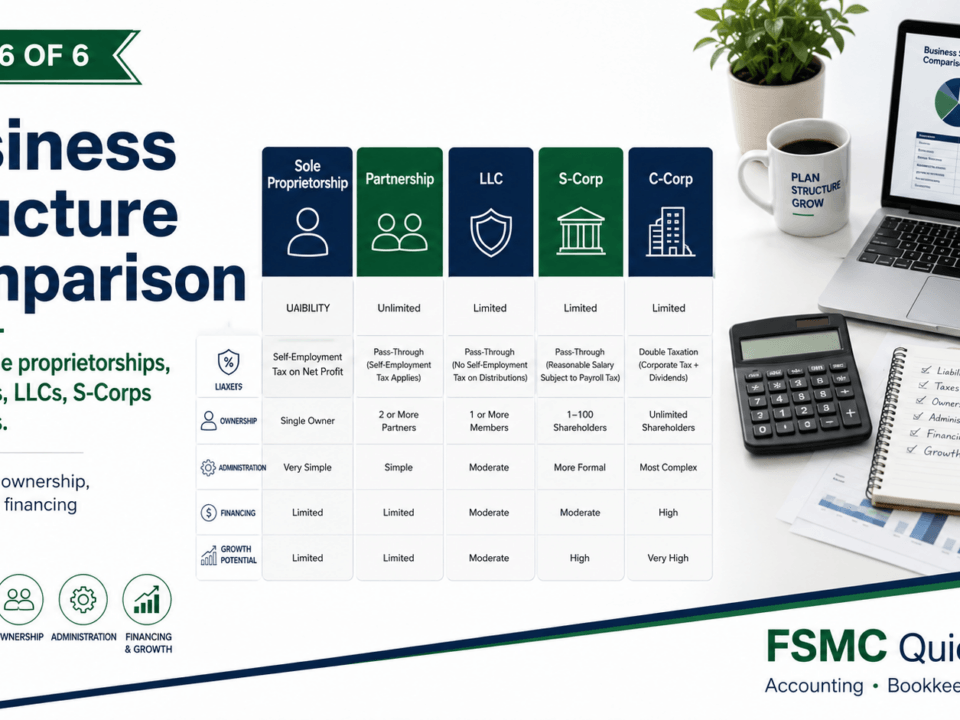
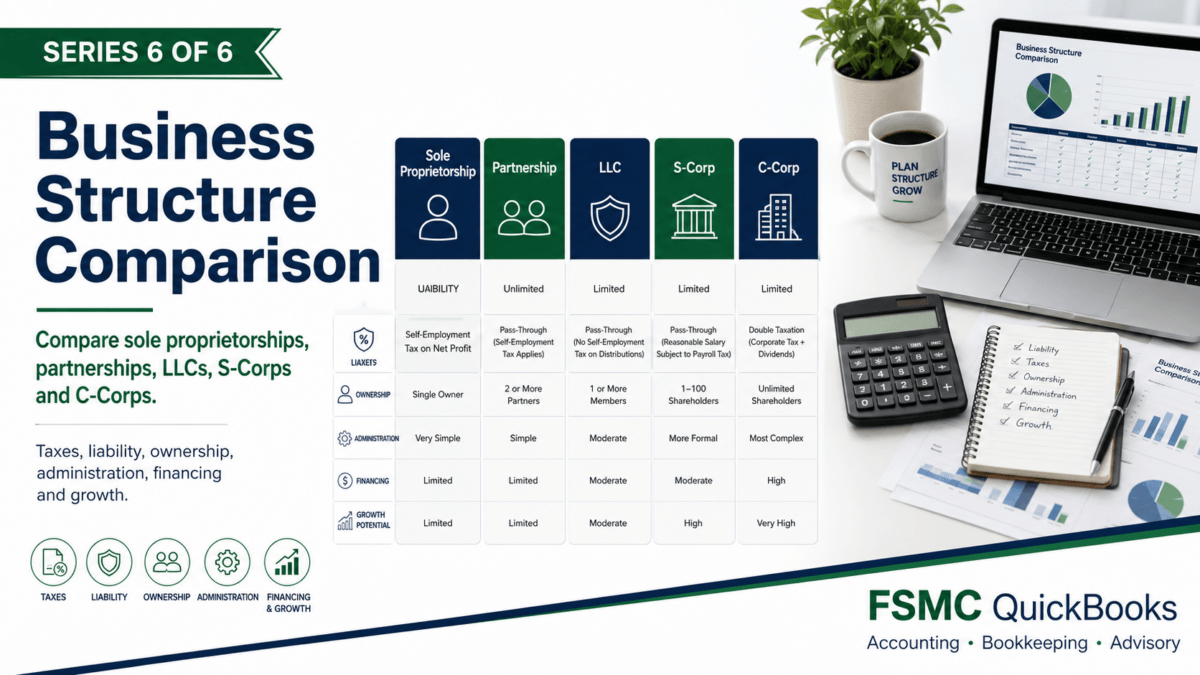
Learn more about the details in our article on Business Structure Comparison: Sole Prop, Partnership, LLC, S-Corp or C-Corp.
Factors to Consider When Choosing a Business Structure
When deciding which business organization to choose, consider the following factors:
- Ownership Flexibility: How many partners or owners do you expect to have? Some structures allow for variable ownership.
- Liability Exposure: Are you comfortable risking personal assets for business debts?
- Tax Treatment: Consider whether you prefer pass-through taxation or traditional corporate tax treatment.
- Administrative Burden: Some structures require more formalities, like regular meetings and detailed recordkeeping.
- Financing Needs: Consider how easy it is to raise funds in each structure.
- Growth Goals: Does the structure support your long-term objectives?
Seeking Professional Advice
Choosing a business structure is a significant decision that can have lasting implications. It’s crucial to consult a qualified legal, tax, or accounting professional who can offer tailored advice based on your unique circumstances.
Conclusion
Understanding the differences among sole proprietorships, partnerships, LLCs, S-Corps, and C-Corps is essential in making an informed decision on which business organization to choose. Each structure presents various benefits and limitations that can significantly impact your business’s operations, liability, and growth potential.
If you’re navigating the complexities of business organization and bookkeeping, consider reaching out to FSMC Bookkeeping Services. We specialize in helping business owners maintain accurate financial records and implement effective bookkeeping practices tailored to your chosen structure.
Explore more about how we can assist you at FSMC Bookkeeping Services.
Related Business Structure Resources
- Sole Proprietorship: Benefits, Limitations and Tax Treatment
- Partnerships: Benefits, Limitations and Tax Treatment
- LLC Tax Treatment: Single-Member, Partnership or S-Corp?
- C-Corporation: Benefits, Limitations and Tax Treatment
- Business Structure Comparison: Sole Prop, Partnership, LLC, S-Corp or C-Corp