
How to Choose the Right Business Structure: LLC, S-Corp & More
August 17, 2026
Partnership Benefits & Tax Treatment: Form 1065 & K-1
August 17, 2026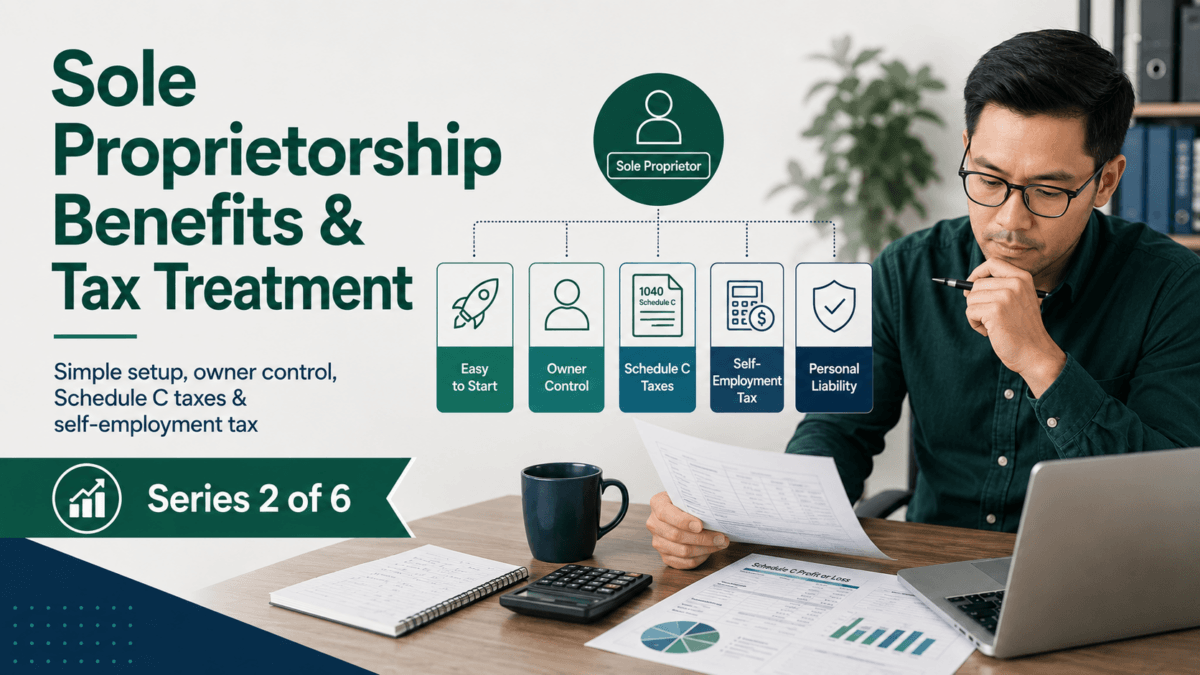
A sole proprietorship is one of the simplest forms of business ownership, making it an appealing option for many entrepreneurs and business owners. Understanding the sole proprietorship benefits and taxes can provide critical insights when considering the best business structure for your unique situation.
Who is a Sole Proprietor?
A sole proprietor is an individual who owns and operates a business without forming a separate legal entity. This structure is particularly attractive for individuals starting a one-owner startup due to its straightforward formation process and minimal regulatory requirements. With a sole proprietorship, you have full control over all facets of your business, which can be incredibly rewarding for dedicated entrepreneurs.
Benefits of a Sole Proprietorship
- Easy Setup: Forming a sole proprietorship often involves less paperwork and lower costs compared to other business structures like LLCs or corporations.
- Complete Control: As the sole owner, you have direct control over all business decisions and operations, allowing for swift, autonomous decision-making.
- Simplified Taxes: Tax reporting can be simpler, as profits and losses are reported directly on your personal tax return, eliminating the need for a separate business return.
- Minimal Compliance Requirements: Sole proprietorships generally face fewer regulatory and compliance requirements than corporations or LLCs.
Limitations of a Sole Proprietorship
Despite its many benefits, there are significant limitations to consider before deciding on this business structure:
- Lack of Separation: A sole proprietorship does not create a separate legal entity. This means that the owner is personally liable for all debts and obligations, putting personal assets at risk.
- Difficulty in Raising Capital: Sole proprietors may find it challenging to obtain financing, as lenders often perceive sole proprietorships as riskier investments compared to limited liability entities.
- Management Limitations: The responsibility of running the business falls solely on the owner, which can be overwhelming, especially as the business grows.
- Potential for Limited Growth: If you wish to add partners or investors in the future, transitioning out of a sole proprietorship may complicate matters.
Understanding Tax Treatment for Sole Proprietorships
Tax treatment is a critical factor in operating as a sole proprietor. Business income is generally reported on the owner’s individual tax return using Schedule C (Form 1040). One key point to note is that self-employment tax can apply to your business income, which covers Social Security and Medicare taxes. It’s crucial to keep precise records of all business transactions to ensure accurate reporting and tax compliance.
The separation between legal structure and tax classification is important. Unlike solely proprietorships, a single-member LLC is considered a state-law entity. Despite being disregarded for federal income tax purposes, it offers liability protection, which a sole proprietorship does not provide.
Recordkeeping and Bookkeeping Needs
Understanding your bookkeeping needs as a sole proprietor is essential for smooth business operations. FSMC Bookkeeping Services can help streamline your bookkeeping processes, ensuring that your records are organized and accurately reflect business activities. Utilizing tools like QuickBooks Online can aid in:
- Tracking income and expenses efficiently
- Organizing bank and credit card transactions
- Reconciling accounts for accurate financial reporting
- Facilitating payroll-related workflows
- Providing visibility into your financial health
Proper organization of financial records not only aids in compliance but also prepares you for potential audits and supports informed decision-making. A sole proprietor should aim to keep personal and business finances distinctly separated for clearer financial accountability.
Conclusion
While a sole proprietorship can offer many attractive benefits for solo entrepreneurs, it also presents specific limitations, particularly concerning personal liability and growth potential. Those considering this structure should weigh these factors carefully and seek professional advice to ensure it aligns with their business objectives.
For more insights into choosing the right business structure, consider visiting our detailed overview at choose the right business structure.
Related Business Structure Resources
If you have further questions or need assistance with bookkeeping and accounting tailored to your business needs, reach out to FSMC Bookkeeping Services. Explore our offerings and see how we can help you streamline your bookkeeping processes at FSMC Bookkeeping Services.