
Partnership Benefits & Tax Treatment: Form 1065 & K-1
August 17, 2026
C Corporation Benefits & Tax Treatment: Taxes & Growth
August 17, 2026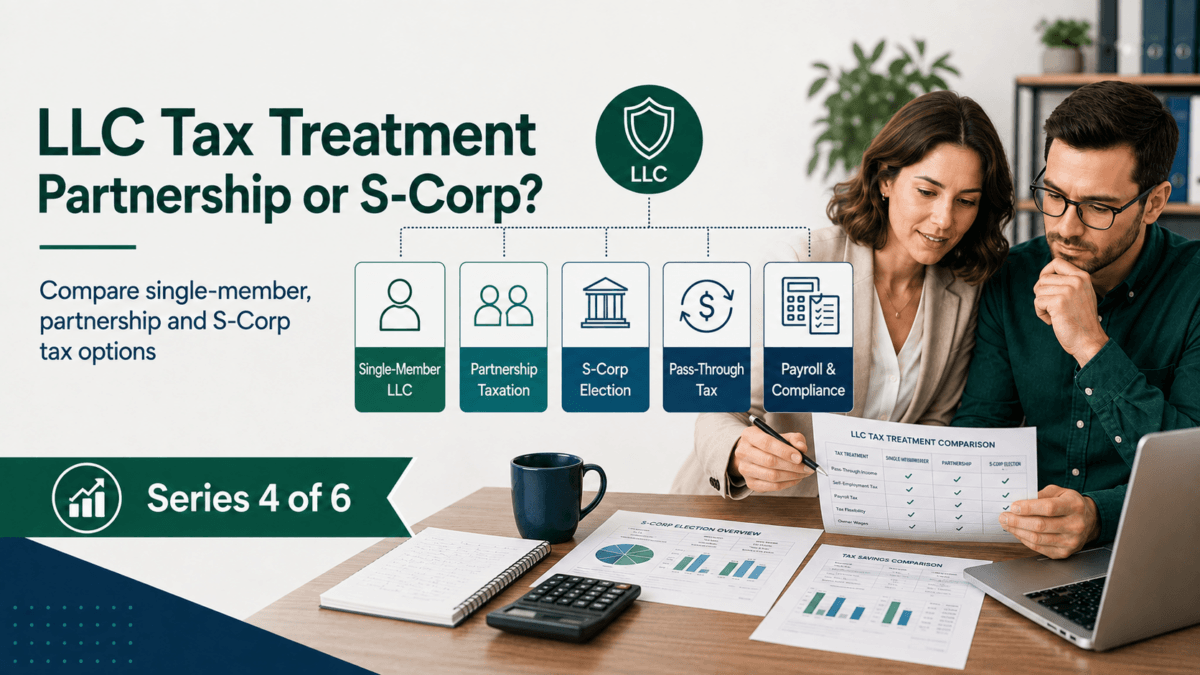
Understanding the LLC tax treatment is essential for business owners and entrepreneurs as it impacts how their business is structured and the tax implications of that structure. The Limited Liability Company (LLC) offers flexibility in both its legal form and the way it can be taxed. This blog post helps clarify the differences between forming an LLC under state law and the choices available for federal tax classification.
The Flexibility of the LLC Structure
An LLC is a popular business structure due to its flexibility and liability protection features. While state law governs the formation and operation of LLCs, the IRS provides guidelines on how these entities are taxed. This dual structure allows owners to choose how they want their LLC to be treated for tax purposes.
Single-Member LLCs
A domestic single-member LLC is treated as a disregarded entity for federal income tax purposes unless it opts for corporate treatment. This means that the LLC does not file its own tax return; instead, the owner reports the income and expenses directly on their personal tax return, generally using Schedule C. This simplification can be advantageous for single owners, as it reduces administrative burden.
Multi-Member LLCs
In contrast, a domestic LLC with two or more members is typically taxed as a partnership by default. Like single-member LLCs, multi-member LLCs do not pay federal income taxes directly. Instead, the profits and losses are passed through to the members, who report them on their personal tax returns. This pass-through taxation can minimize the potential tax burden on the LLC.
Liability Protection and Management Flexibility
Regardless of how an LLC is taxed, it maintains the fundamental characteristic of limiting the personal liability of its owners. This protection is essential for business owners and ensures that personal assets are typically shielded from business debts and lawsuits.
Moreover, LLCs offer management flexibility, as they can be managed by the members directly or designate managers, providing operational versatility.
Choosing S-Corporation Status
Eligible LLCs may elect to be treated as S-corporations for federal tax purposes. This election can potentially reduce self-employment taxes for owners who actively participate in the business but also introduces payroll and reasonable-compensation requirements for shareholder-employees. While S-corporation status can offer tax benefits, it’s important to consider that it may also complicate administration due to these additional requirements.
Key Considerations for LLC Tax Treatment
- Recordkeeping: Maintaining accurate records is crucial for all business structures. Regardless of whether you choose single-member, multi-member, or S-corporation classification, clear and organized bookkeeping will help you effectively manage your tax obligations.
- Administration Complexity: The S-corp election can introduce additional administrative responsibilities, including payroll processing and compliance with IRS guidelines.
- Financing Opportunities: Depending on your LLC’s tax classification, you may be better positioned to attract investors or apply for loans as financing often depends on the perceived stability and compliance of the business.
Conclusion
Choosing the right tax treatment for your LLC is not only about the legal entity structure but also involves understanding the implications of federal tax classifications. Whether you opt for single-member disregarded treatment, partnership taxation, or an S-corporation election, each choice has its unique benefits and drawbacks. It’s crucial for business owners to engage with qualified legal, tax, or accounting professionals to navigate these options effectively.
At FSMC Bookkeeping Services, we specialize in helping business owners maintain accurate financial records and navigate the complexities of bookkeeping and tax administration. Explore more about our services at FSMC Bookkeeping Services to ensure that your LLC’s financial framework is as efficient and organized as possible.