
LLC Tax Treatment: Single-Member, Partnership or S-Corp?
August 17, 2026
Business Structure Comparison: LLC, S-Corp, C-Corp & More
August 17, 2026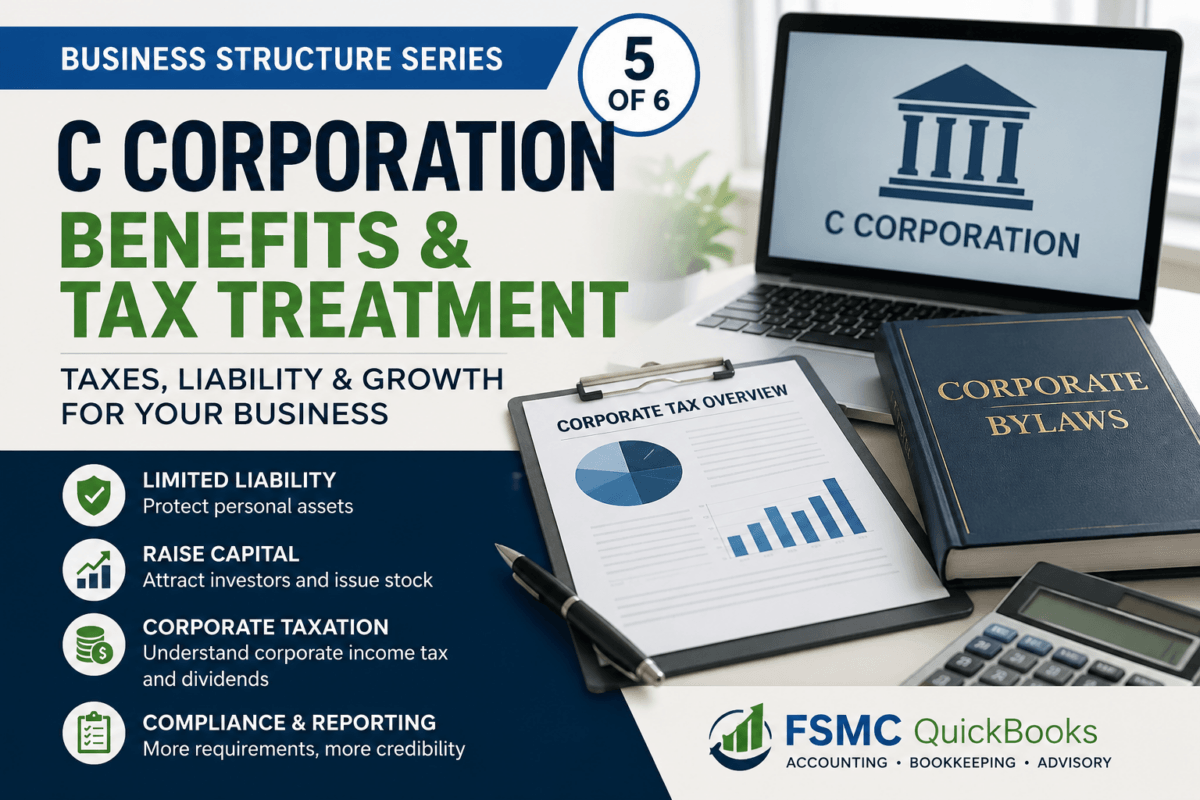
In the landscape of business structures, the C-Corporation stands out due to its distinctive characteristics. This entity type grants a separate legal identity, offering ownership and capital-raising flexibility advantages. Understanding the c corporation benefits and taxes is crucial for business owners, entrepreneurs, and franchise operators weighing their options.
What is a C-Corporation?
A C-Corporation, commonly referred to as a C Corp, is a legal structure where the business exists independently of its owners. This separation allows for numerous advantages, including the ability to raise capital by issuing stock. Furthermore, owners, known as shareholders, enjoy limited liability, protecting personal assets from the corporation’s debts and liabilities.
Benefits of a C-Corporation
- Limited Liability: Shareholders’ personal assets are typically shielded from business liabilities, reducing personal risk.
- Capital Flexibility: C-Corps can issue multiple classes of stock, facilitating diverse investment opportunities.
- Continuity of Existence: The corporation persists beyond the lifespan or involvement of its founders, providing stability.
- Attracting Investors: C-Corps are appealing to venture capitalists, as investments can be easily exchanged for stock shares.
- Tax Benefits: Certain fringe benefits offered by C-Corps may be tax-deductible for the business.
Limitations of a C-Corporation
While a C-Corporation offers numerous benefits, there are drawbacks to consider:
- Formality Requirements: C-Corps are subject to strict compliance obligations, including regular meetings and extensive recordkeeping.
- Administrative Complexity: Managing a C-Corp involves layers of compliance, potentially increasing operational complexity.
- Double Taxation: Profits are taxed at the corporate level, and dividends distributed to shareholders may also be taxed on an individual level.
Tax Treatment of C-Corporations
Understanding the federal tax implications of a C-Corporation is essential. Unlike pass-through entities such as S-Corporations or LLCs, a C-Corporation is subject to federal corporate income tax. This leads to a taxation structure often referred to as “double taxation.” Here’s how it works:
- Corporate Tax Rate: The corporation pays tax on its profits at the federal level.
- Dividends Tax: If profits are distributed as dividends, shareholders must pay personal income tax on that distribution.
- Compensation Considerations: Shareholders who actively work in the business can receive salaries, which reduce corporate earnings and may offer a strategy to mitigate some effects of double taxation.
It’s essential to note that tax outcomes vary depending on individual circumstances such as compensation levels, retained earnings, and distribution strategies. The implications of various strategies hinge on the corporation’s accounting and tax planning approaches. Therefore, consulting with a qualified professional is advisable.
Financial Administration and Recordkeeping
Operating a C-Corporation requires strict financial management to support compliance with regulations and governance formalities. Accurate bookkeeping is crucial for:
- Tracking income and expenses
- Organizing bank and credit card transactions
- Conducting timely account reconciliation
- Preparing for tax obligations
- Providing visibility into financial performance
Utilizing technology, such as QuickBooks Online, can significantly enhance bookkeeping efficiencies. FSMC Bookkeeping Services specializes in optimizing QuickBooks Online workflows tailored to C-Corporations, helping to ensure that all financial activities are accurately recorded and organized.
Conclusion
The choice to operate as a C-Corporation involves careful consideration of both its benefits and limitations. While the advantages of limited liability, capital-raising flexibility, and continuity of existence are appealing, the associated compliance burdens and tax implications cannot be overlooked. Business owners should take time to assess their unique circumstances and prospects.
For tailored advice regarding your specific situation, consider consulting with qualified professionals. Additionally, if you need assistance with maintaining accurate financial records and improving bookkeeping processes, FSMC Bookkeeping Services is here to help you navigate these complexities.
Explore how FSMC Bookkeeping Services can support your financial administration needs by visiting https://fsmcquickbooks.com/.